
cancel
Showing results for 
Search instead for 
Did you mean: 

We've captured the moments from FabCon & SQLCon that everyone is talking about, and we are bringing them to the community, live and on-demand. Starts on April 14th. Register now

Reply
mstefancik
Advocate IV
Advocate IV

Distinctcount based on two columns

Hello,


I have got 2 tables with different columns, but wto columns are same, date and customerID. I would like to do distinctcount to count all customerIDs from these two tables.


dc.PNG

As shown in the picture, correct result I am expecting is 4.


Any suggestions? Thx

1 ACCEPTED SOLUTION
sdjensen
Solution Sage
Solution Sage

Hi @mstefancik,


You could try this:


First calculate a new table having the values of CustomerID from Table1 and Table2

Table = UNION (VALUES( 'Table1'[CustomerID] ), VALUES (Table2[CustomerID] ) )


And then create a measure that counts the distinct values in the new table

Distinct Customers = DISTINCTCOUNT('Table'[CustomerID])


/sdjensen

View solution in original post

3 REPLIES 3
v-qiuyu-msft
Community Support
Community Support

Hi @mstefancik,


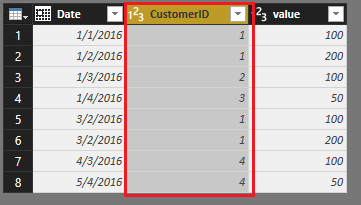
In addition, you can also use "Append Queries" feature in Query Editor to append Table2 to Table1. The new table looks like below:

z1.PNG

z2.PNG


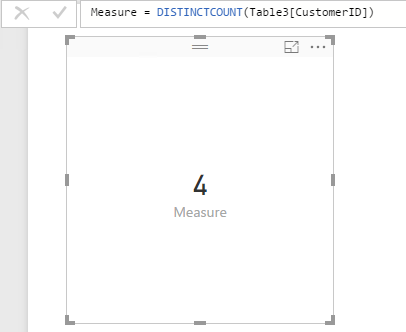
Then create a measure to return the count of distinct values:


z3.PNG


If you have any question, please feel free to ask.


Best Regards,
Qiuyun Yu

Community Support Team _ Qiuyun Yu
If this post helps, then please consider Accept it as the solution to help the other members find it more quickly.
sdjensen
Solution Sage
Solution Sage

Hi @mstefancik,


You could try this:


First calculate a new table having the values of CustomerID from Table1 and Table2

Table = UNION (VALUES( 'Table1'[CustomerID] ), VALUES (Table2[CustomerID] ) )


And then create a measure that counts the distinct values in the new table

Distinct Customers = DISTINCTCOUNT('Table'[CustomerID])


/sdjensen

An alternative solution could be to select the distinct values into you table and then just create a count of the rows in your new table - I would suspect this approach to be faster, but you really need to test this.


Table:

Table = DISTINCT( UNION (VALUES( 'Table1'[CustomerID] ); VALUES (Table2[CustomerID] ) ) )

Measure:

Distinct Customers = COUNTROWS('Table')
/sdjensen

Helpful resources

Announcements
New to Fabric survey Carousel

New to Fabric Survey

If you have recently started exploring Fabric, we'd love to hear how it's going. Your feedback can help with product improvements.

Power BI DataViz World Championships carousel

Power BI DataViz World Championships - June 2026

A new Power BI DataViz World Championship is coming this June! Don't miss out on submitting your entry.

Join our Fabric User Panel

Join our Fabric User Panel

Share feedback directly with Fabric product managers, participate in targeted research studies and influence the Fabric roadmap.