This time we’re going bigger than ever. Fabric, Power BI, SQL, AI and more. We're covering it all. You won't want to miss it.
Learn moreDid you hear? There's a new SQL AI Developer certification (DP-800). Start preparing now and be one of the first to get certified. Register now
Hi Community,
I hope this will be simple question, im trying to achieve what is calculation in column marked yellow:
So i have a table by Item number and by week both with supply and demand and i would like to write a measure showing me what is the stock level for each week (starting week should take Start Stock Value) and leter stock level should be calculated from previous week. is ist doable?
Hi @mhsk ,
Below is the solution of a calculated column based on your data here. Maybe you have other conditions. Please reply to this.
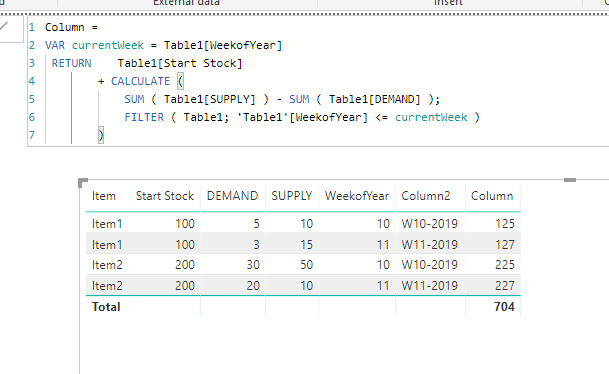
Column = VAR currentWeek = [Week of Year] RETURN [Start Stock] + CALCULATE ( SUM ( Table1[SUPPLY] ) - SUM ( Table1[DEMAND] ), FILTER ( 'Table1', 'Table1'[Week of Year] <= currentWeek ) )
Best Regards,
OK, this will work pretty good while you have 1 item and week numbers dosnt duplicate. but what if table has many items and then many the same week's in column week of year. how can i tell power bi that im looking for this specific item context?
(if i apply this calculated column to data where more than one occurence of the same week exist then it crashes )
@mhsk Can you please provide a sample data ?
Hi,
pbix file with expected outcome attached, it is a bit different than previously, i can merge demand and supply table on part and weekyear if needed.
any ideas?
This is how it looks: So i would also need dax to know that we are looking at this item only and this week
Hi @mhsk ,
Can you share a new sample that can be more accurate to display your model? Please share the pbix file if you can. Please mask the sensitive parts first.
Best Regards,
Check out the April 2026 Power BI update to learn about new features.
If you have recently started exploring Fabric, we'd love to hear how it's going. Your feedback can help with product improvements.
| User | Count |
|---|---|
| 37 | |
| 37 | |
| 31 | |
| 21 | |
| 16 |
| User | Count |
|---|---|
| 66 | |
| 56 | |
| 31 | |
| 26 | |
| 23 |