cancel
Showing results for 
Search instead for 
Did you mean: 

The Power BI Data Visualization World Championships is back! Get ahead of the game and start preparing now! Learn more

Reply
Anonymous
Not applicable

Individual Number Formatting

Hi all,


 Capture.PNG


I was wondering whether there was a way of changing the format of the data so that only the bottom row's numbers show as a percentage, rather than each whole column.


Apologies if there is a basic solution to this - I've only just started using PBI!


Many thanks

updog

1 ACCEPTED SOLUTION

Hi @Anonymous,


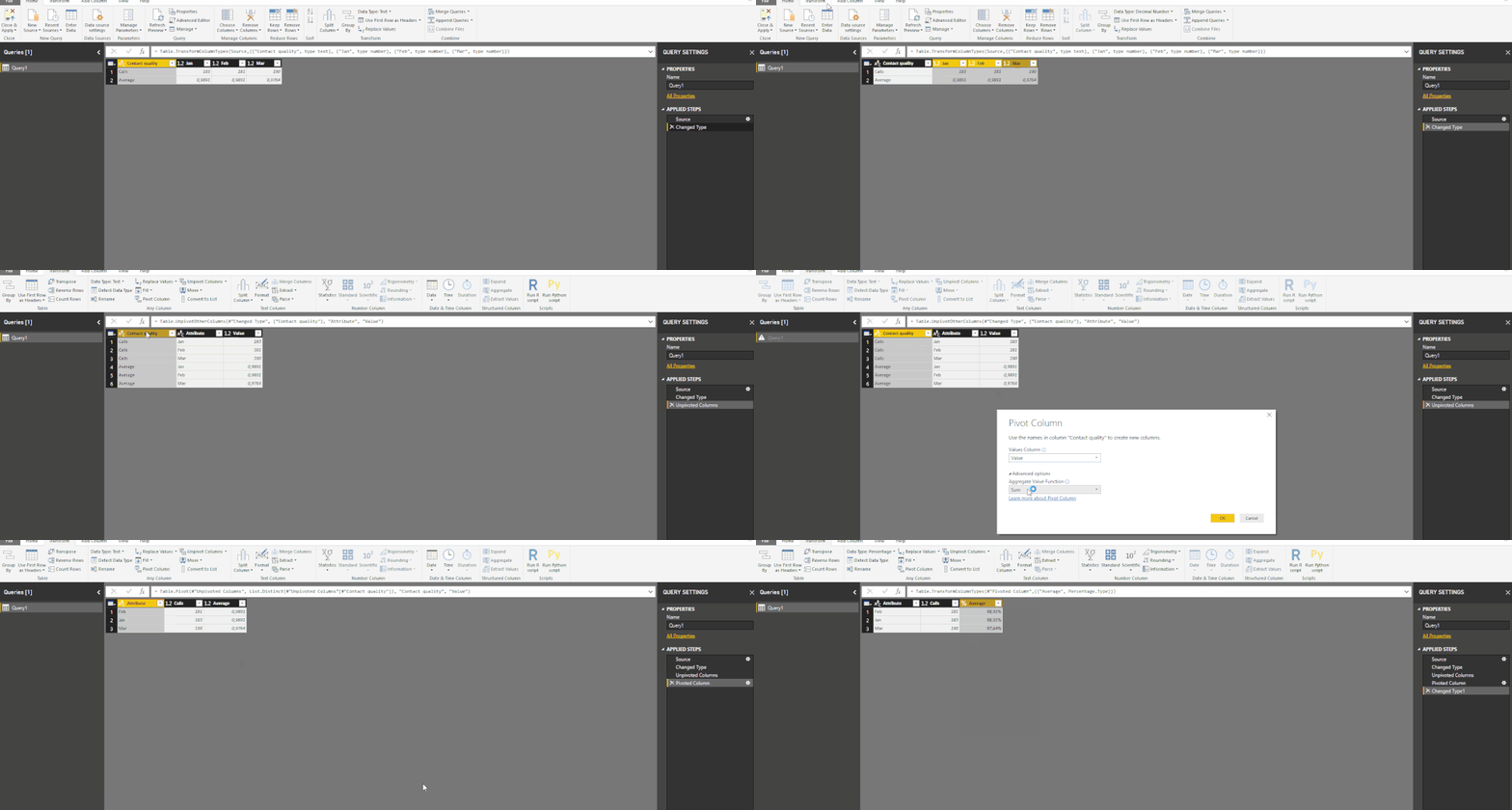
See below an image of how to do the unpivot and pivot on the query editor.


The selection of the columns for the unpivot should compreend all your months.


unpivot.gif


Regards,

MFelix


Regards

Miguel Félix


Did I answer your question? Mark my post as a solution!

Proud to be a Super User!

Check out my blog: Power BI em Português



View solution in original post

4 REPLIES 4
Azhar1
Regular Visitor

Hi, You can do a conditional formatting in DAX expression for any specific number format.

Try formatting 2 numbers seperately by creating 2 measures, then write a DAX expression using IF condition to use those 2 measures as per the row.


Hope this helps.


Kind Regards,

Azhar Sayyad

MFelix
Super User
Super User

Hi @Anonymous,


The best way is to unpivot your columns and then Pivot by the Contact Quality.


Check below the M Code for some sample data:


let
    Source = Table.FromRows(Json.Document(Binary.Decompress(Binary.FromText("i45Wck7MySlW0lEytDAGk4Yg0tJAKVYnWsmxLLUoMT0VKGKgZ2lhaYjGMDczUYqNBQA=", BinaryEncoding.Base64), Compression.Deflate)), let _t = ((type text) meta [Serialized.Text = true]) in type table [#"Contact quality" = _t, Jan = _t, Feb = _t, Mar = _t]),
    #"Changed Type" = Table.TransformColumnTypes(Source,{{"Contact quality", type text}, {"Jan", type number}, {"Feb", type number}, {"Mar", type number}}),
    #"Unpivoted Columns" = Table.UnpivotOtherColumns(#"Changed Type", {"Contact quality"}, "Attribute", "Value"),
    #"Pivoted Column" = Table.Pivot(#"Unpivoted Columns", List.Distinct(#"Unpivoted Columns"[Contact quality]), "Contact quality", "Value"),
    #"Changed Type1" = Table.TransformColumnTypes(#"Pivoted Column",{{"Average", Percentage.Type}})
in
    #"Changed Type1"


Regards,

MFelix


Regards

Miguel Félix


Did I answer your question? Mark my post as a solution!

Proud to be a Super User!

Check out my blog: Power BI em Português


Anonymous
Not applicable

Hello @MFelixand @Azhar1,


Thank you very much for your replies.


While I'm sure your solutions are helpful, I'm a complete beginner so I don't know how to go about doing the stuff you mentioned.


I would be grateful if you could clarify this. Sorry again!


Kind regards

updog 

Hi @Anonymous,


See below an image of how to do the unpivot and pivot on the query editor.


The selection of the columns for the unpivot should compreend all your months.


unpivot.gif


Regards,

MFelix


Regards

Miguel Félix


Did I answer your question? Mark my post as a solution!

Proud to be a Super User!

Check out my blog: Power BI em Português


Helpful resources

Announcements
November Power BI Update Carousel

Power BI Monthly Update - November 2025

Check out the November 2025 Power BI update to learn about new features.

Fabric Data Days Carousel

Fabric Data Days

Advance your Data & AI career with 50 days of live learning, contests, hands-on challenges, study groups & certifications and more!

FabCon Atlanta 2026 carousel

FabCon Atlanta 2026

Join us at FabCon Atlanta, March 16-20, for the ultimate Fabric, Power BI, AI and SQL community-led event. Save $200 with code FABCOMM.