Join us at FabCon Atlanta from March 16 - 20, 2026, for the ultimate Fabric, Power BI, AI and SQL community-led event. Save $200 with code FABCOMM.
Register now!Vote for your favorite vizzies from the Power BI Dataviz World Championship submissions. Vote now!
I have the following data:
Table of Sellers
Saller_ID,Client_ID,Region
1,1,North
1,2,North
1,3,South
2,4,North
3,5,West
4,6,East
5,7,East
5,8,East
6,9,South
7,10,South
8,11,South
Table of Clients
Client_ID
1
2
3
4
5
6
7
8
9
10
11
I want to produce the following chart:
Region Distinct Count of Client_ID
North 2
South 4
West 1
East 2
But I'm getting this as result:
Region Distinct Count of Client_ID
North 3
South 4
West 1
East 3
How can I distinct count ID by Region using a measure?
Solved! Go to Solution.
Well you either want Distinct Sellers or you have the data reversed
(meaning data in Seller_ID column should be in Client_ID and vice versa)
Distinct Sellers = DISTINCTCOUNT ( 'Sellers Table'[Seller_ID] )
@Anonymous
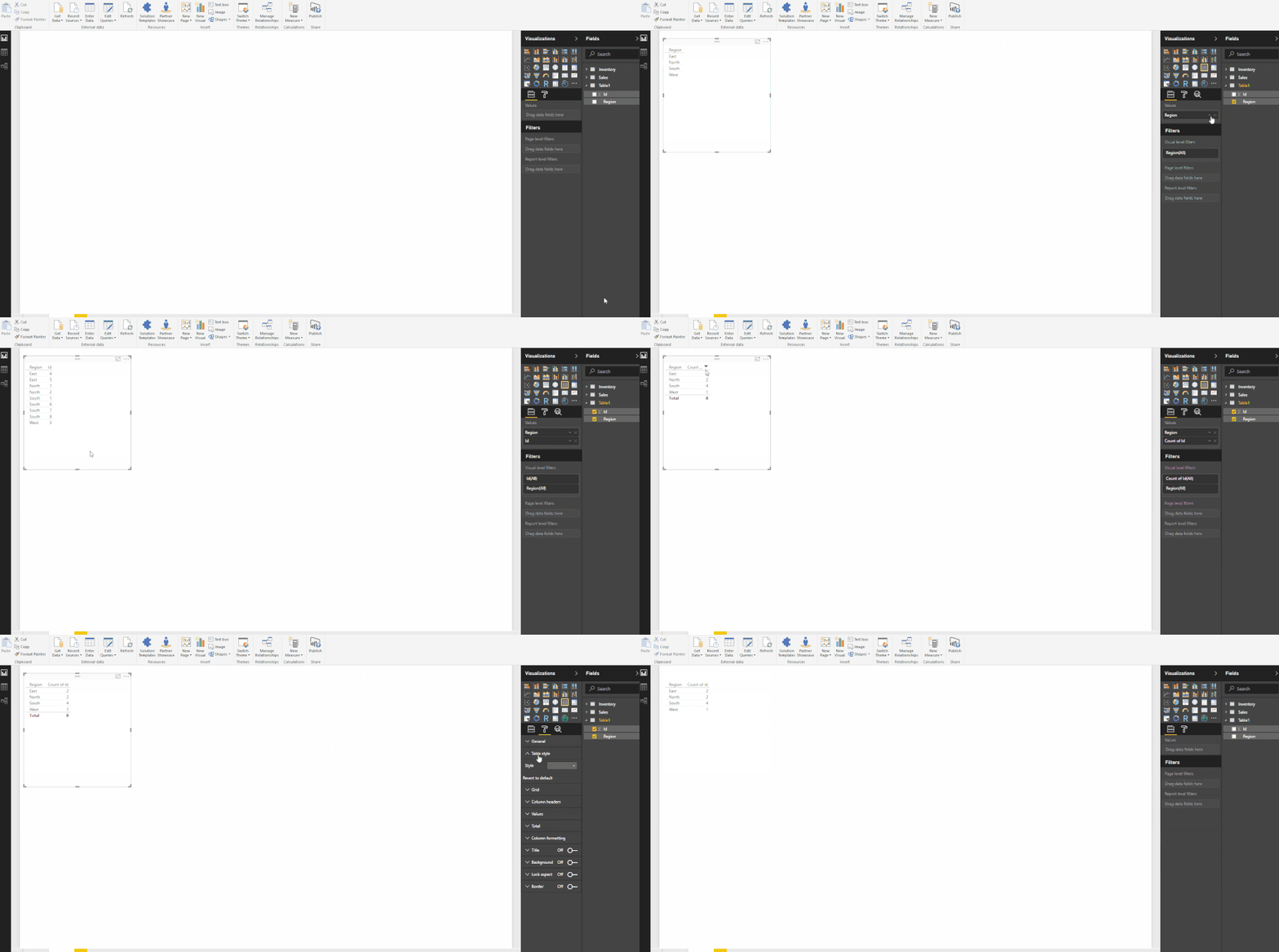
Hi Friend, Look the Image Please
Hi @Vvelarde, I forgot to mention that I need to do it using a measure. Can you help me?
@Anonymous
Hi, try this:
TheMeasure = DISTINCTCOUNT(Table1[Id])
Well you either want Distinct Sellers or you have the data reversed
(meaning data in Seller_ID column should be in Client_ID and vice versa)
Distinct Sellers = DISTINCTCOUNT ( 'Sellers Table'[Seller_ID] )
Vote for your favorite vizzies from the Power BI World Championship submissions!
If you love stickers, then you will definitely want to check out our Community Sticker Challenge!
Check out the January 2026 Power BI update to learn about new features.
| User | Count |
|---|---|
| 66 | |
| 51 | |
| 42 | |
| 25 | |
| 22 |
| User | Count |
|---|---|
| 140 | |
| 116 | |
| 56 | |
| 37 | |
| 31 |