Don't miss your chance to take the Fabric Data Engineer (DP-700) exam on us!
Learn moreNext up in the FabCon + SQLCon recap series: The roadmap for Microsoft SQL and Maximizing Developer experiences in Fabric. All sessions are available on-demand after the live show. Register now
I have a report I am working on where I cannot get my dates to play nice with one another. The issue has to do with owner invoices and payments. My model has the customer payments PK linked to the owner invoice table. The owner invoice table is linked to my calendar table. I am unable to create an active relationship between the payment date and my calendar table. The result is that while my invoice amounts are correct, the payment amounts are not. If you look at Page 1, you will see the correct payment amounts for CompanyCode 002. I have a vague recollection that a bridge table might be the answer, but I'm not sure. Any help would be greatly appreciated.
Solved! Go to Solution.
Hi @tlenzmeier,
If i'm understanding your question correctly you want to have the calculation of payments based on calendar table, but you already have a date relationship between both tables.
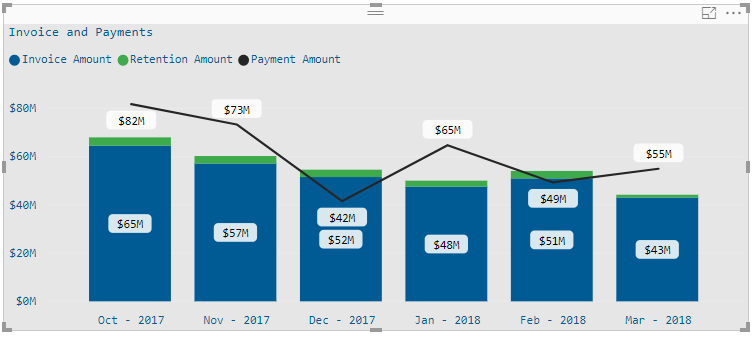
Make an inactive relationship between the tables Calendar and Owner Payments (assuming this is were you have the payment information) then just change your payment measure to:
Payment Amount =
CALCULATE (
SUM ( 'Owner Payments'[PaymentAmount] );
LEFT ( 'Owner Payments'[Transaction Code]; 1 ) = "P";
USERELATIONSHIP ( 'Calendar'[Date]; 'Owner Payments'[Payment Date] )
)The last part is activating the relationship you created and making the calculations based on context final result below:
Attach PBIX file.
Regards,
MFelix
Regards
Miguel Félix
Proud to be a Super User!
Check out my blog: Power BI em PortuguêsHi @tlenzmeier,
If i'm understanding your question correctly you want to have the calculation of payments based on calendar table, but you already have a date relationship between both tables.
Make an inactive relationship between the tables Calendar and Owner Payments (assuming this is were you have the payment information) then just change your payment measure to:
Payment Amount =
CALCULATE (
SUM ( 'Owner Payments'[PaymentAmount] );
LEFT ( 'Owner Payments'[Transaction Code]; 1 ) = "P";
USERELATIONSHIP ( 'Calendar'[Date]; 'Owner Payments'[Payment Date] )
)The last part is activating the relationship you created and making the calculations based on context final result below:
Attach PBIX file.
Regards,
MFelix
Regards
Miguel Félix
Proud to be a Super User!
Check out my blog: Power BI em PortuguêsSo simple! Thank you!!
If you have recently started exploring Fabric, we'd love to hear how it's going. Your feedback can help with product improvements.
A new Power BI DataViz World Championship is coming this June! Don't miss out on submitting your entry.
Share feedback directly with Fabric product managers, participate in targeted research studies and influence the Fabric roadmap.
| User | Count |
|---|---|
| 50 | |
| 44 | |
| 42 | |
| 19 | |
| 19 |
| User | Count |
|---|---|
| 69 | |
| 68 | |
| 33 | |
| 32 | |
| 32 |