Don't miss your chance to take the Fabric Data Engineer (DP-600) exam for FREE! Find out how by attending the DP-600 session on April 23rd (pacific time), live or on-demand.
Learn moreNext up in the FabCon + SQLCon recap series: The roadmap for Microsoft SQL and Maximizing Developer experiences in Fabric. All sessions are available on-demand after the live show. Register now
Hi
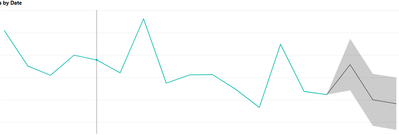
I’m trying to forecast the sales for the coming 3 months. I’ve 4 years of data. The thing is that I’ve two months each year where there is spike in sales.
I’m trying to use the Forecast function in Power BI to forecast the sales in the coming 3 months. The problem is that if I used the last 15 months to forecast the coming 3 months, the spikes in two months makes the results not accurate.
What can I use in order to reduce the impact on the spike in the two months.
Hi
I noticed your post yesterday but noticed you hadn't any replies...
So, I have a few questions:
What is the granularity of your data?
If Daily, I would try to use a Rolling Average measure.
BUT your chart seems to show monthly but a monthly axis (Yr-Mon) would be "categorical", making forecasting impossible (as far as I know).
Any comments?
(*Fake data* would probably help.)
Edited to add: Consider setting Seasonality at 365 data-points.
If you have recently started exploring Fabric, we'd love to hear how it's going. Your feedback can help with product improvements.
A new Power BI DataViz World Championship is coming this June! Don't miss out on submitting your entry.
Share feedback directly with Fabric product managers, participate in targeted research studies and influence the Fabric roadmap.
| User | Count |
|---|---|
| 48 | |
| 43 | |
| 39 | |
| 19 | |
| 17 |
| User | Count |
|---|---|
| 69 | |
| 63 | |
| 32 | |
| 30 | |
| 23 |