Hi All,
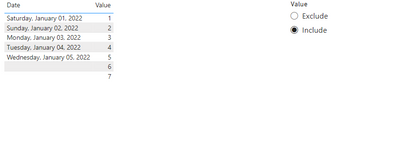
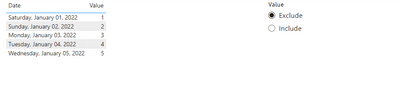
I am looking to create a map in which the points (long and lat.) are filterable by a date slicer and have a toggle that includes/excludes blank dates.
The issue concerns the treatment of blank/"null" dates whilst using slicer. I do not believe there is a solution.
I have tried:
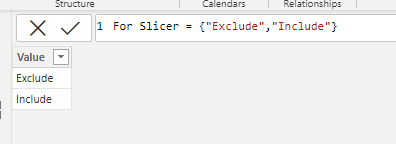
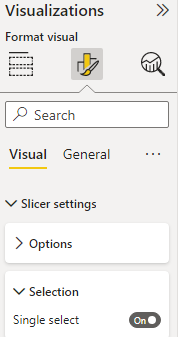
- using a variable input from user (slicer outputting a value with with "selectedvalue" measure) - similar to this post: https://community.powerbi.com/t5/Desktop/OR-include-blank-values-in-date-slicer/td-p/959529
- restructuring data/queries (e.g. duplicating the data set three times over for each scenario)
- other
Simply having a drop-down list whereby the user selecs the date and "blank" checkbox isnt a neat solution when looking across years of dates.
Thanks,
****EDIT: I am aware of the method using measures as user-input variables - however to my knowledge this does not work for maps (long. lat. inputs) as the measure neds to return a table of circa 10,000 lat. and longs. which would take too much computing time when looking at a published dashboard product.
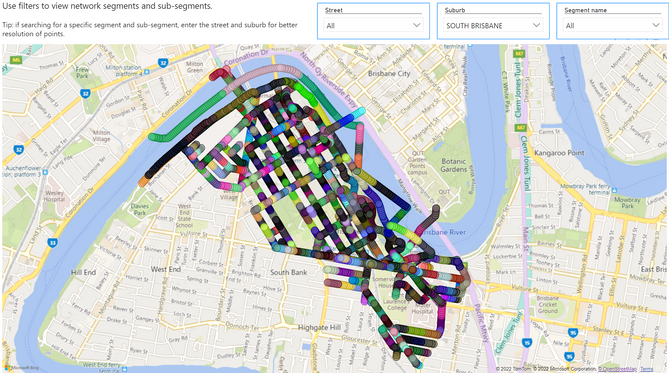
To give you an idea, the below is a small aea of a larger network. The date filter is being used on each of those segments (noted by colour here). Recalculating the measure every time a filter is touched will take too long (the final data set may be in the order of 1-2 million points).
My current approach is to exclude all blank dates and show on another page/tab.