FabCon is coming to Atlanta
Join us at FabCon Atlanta from March 16 - 20, 2026, for the ultimate Fabric, Power BI, AI and SQL community-led event. Save $200 with code FABCOMM.
Register now!- Power BI forums
- Get Help with Power BI
- Desktop
- Service
- Report Server
- Power Query
- Mobile Apps
- Developer
- DAX Commands and Tips
- Custom Visuals Development Discussion
- Health and Life Sciences
- Power BI Spanish forums
- Translated Spanish Desktop
- Training and Consulting
- Instructor Led Training
- Dashboard in a Day for Women, by Women
- Galleries
- Data Stories Gallery
- Themes Gallery
- Contests Gallery
- QuickViz Gallery
- Quick Measures Gallery
- Visual Calculations Gallery
- Notebook Gallery
- Translytical Task Flow Gallery
- TMDL Gallery
- R Script Showcase
- Webinars and Video Gallery
- Ideas
- Custom Visuals Ideas (read-only)
- Issues
- Issues
- Events
- Upcoming Events
The Power BI Data Visualization World Championships is back! Get ahead of the game and start preparing now! Learn more
- Power BI forums
- Forums
- Get Help with Power BI
- Desktop
- Replacement for Union in Direct Query
- Subscribe to RSS Feed
- Mark Topic as New
- Mark Topic as Read
- Float this Topic for Current User
- Bookmark
- Subscribe
- Printer Friendly Page

- Mark as New
- Bookmark
- Subscribe
- Mute
- Subscribe to RSS Feed
- Permalink
- Report Inappropriate Content
Replacement for Union in Direct Query
Hello everyone,
If I have this kind of table:
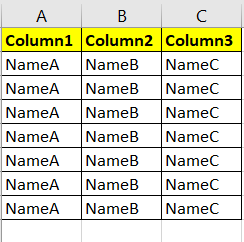
It is confirmed, all rows will have same value on each columns.
Initially I want to Transpose this data To be come simply like this :
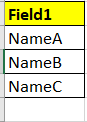
With an addition of 1 column, so probably like this :

The ABC in column [Field] is actually can be the column name of 1st table, I just want to make it easier.
Is this possible with Direct Query Mode ?
At first I thought a UNION like this :
UNION(
SELECTCOLUMNS('Table', "Type", "A", "Description", 'Table'[Column1]),
SELECTCOLUMNS('Table', "Type", "B", "Description", 'Table'[Column2]),
SELECTCOLUMNS('Table', "Type", "C", "Description", 'Table'[Column3]),
But it turns out, this UNION forced me to switch to Import Mode. Any replacement trick to make this possible in Direct Query ?
Thanks
Solved! Go to Solution.


- Mark as New
- Bookmark
- Subscribe
- Mute
- Subscribe to RSS Feed
- Permalink
- Report Inappropriate Content
Hi @Anonymous ,
According to the official document , Calculated tables aren't supported:
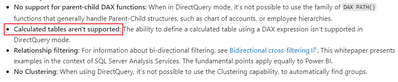
So, you could create the A, B, C three columns as three measures, and then use “union() “to achieve , as follows:
First: create three measures
Ameasure = MAX('Table'[A])BMeasure = MAX('Table'[B])Cmeasure = MAX('Table'[C])Then create new table:
newTable =
DISTINCT (
    UNION (
        SELECTCOLUMNS ( 'Table', "Type", "A", "Description", [Ameasure] ),
        SELECTCOLUMNS ( 'Table', "Type", "B", "Description", [BMeasure] ),
        SELECTCOLUMNS ( 'Table', "Type", "C", "Description", [Cmeasure] )
    )
)
The final output is shown below:

Last, If we create a virtual table with union(), the storage mode will change to mixed mode.

Best Regards,
Community Support Team_ Yalan Wu
If this post helps, then please consider Accept it as the solution to help the other members find it more quickly.
- Mark as New
- Bookmark
- Subscribe
- Mute
- Subscribe to RSS Feed
- Permalink
- Report Inappropriate Content
Hi, @Anonymous
You could see my pbix file. Your data source is still in DQ mode. Since you created a virtual table with union(), it is mix(), which does not affect your data source itself.
Best Regards,
Community Support Team_ Yalan Wu
If this post helps, then please consider Accept it as the solution to help the other members find it more quickly.
- Mark as New
- Bookmark
- Subscribe
- Mute
- Subscribe to RSS Feed
- Permalink
- Report Inappropriate Content
Hi @Anonymous ,
According to the official document , Calculated tables aren't supported:
So, you could create the A, B, C three columns as three measures, and then use “union() “to achieve , as follows:
First: create three measures
Ameasure = MAX('Table'[A])BMeasure = MAX('Table'[B])Cmeasure = MAX('Table'[C])Then create new table:
newTable =
DISTINCT (
    UNION (
        SELECTCOLUMNS ( 'Table', "Type", "A", "Description", [Ameasure] ),
        SELECTCOLUMNS ( 'Table', "Type", "B", "Description", [BMeasure] ),
        SELECTCOLUMNS ( 'Table', "Type", "C", "Description", [Cmeasure] )
    )
)
The final output is shown below:
Last, If we create a virtual table with union(), the storage mode will change to mixed mode.
Best Regards,
Community Support Team_ Yalan Wu
If this post helps, then please consider Accept it as the solution to help the other members find it more quickly.
- Mark as New
- Bookmark
- Subscribe
- Mute
- Subscribe to RSS Feed
- Permalink
- Report Inappropriate Content
Hi,
Thanks, but unfortunately I must use pure DIrect Query.
rgds,
- Mark as New
- Bookmark
- Subscribe
- Mute
- Subscribe to RSS Feed
- Permalink
- Report Inappropriate Content
Hi, @Anonymous
You could see my pbix file. Your data source is still in DQ mode. Since you created a virtual table with union(), it is mix(), which does not affect your data source itself.
Best Regards,
Community Support Team_ Yalan Wu
If this post helps, then please consider Accept it as the solution to help the other members find it more quickly.


- Mark as New
- Bookmark
- Subscribe
- Mute
- Subscribe to RSS Feed
- Permalink
- Report Inappropriate Content
- Mark as New
- Bookmark
- Subscribe
- Mute
- Subscribe to RSS Feed
- Permalink
- Report Inappropriate Content
So, no TRANSPOSE.. and also no UNION...
No other tricks ? 😅
- Mark as New
- Bookmark
- Subscribe
- Mute
- Subscribe to RSS Feed
- Permalink
- Report Inappropriate Content
@Anonymous , I was think of usin userealtionship with a table having distinct names (that can be as import mode table if needed)
But that depend of requirements https://radacad.com/userelationship-or-role-playing-dimension-dealing-with-inactive-relationships-in-power-bi
In this manner we can take total from three columns
also run time union in a measure, depend on need
Helpful resources

Power BI Dataviz World Championships
The Power BI Data Visualization World Championships is back! Get ahead of the game and start preparing now!

Power BI Monthly Update - December 2025
Check out the December 2025 Power BI Holiday Recap!

FabCon Atlanta 2026
Join us at FabCon Atlanta, March 16-20, for the ultimate Fabric, Power BI, AI and SQL community-led event. Save $200 with code FABCOMM.

| User | Count |
|---|---|
| 40 | |
| 35 | |
| 34 | |
| 31 | |
| 28 |


| User | Count |
|---|---|
| 136 | |
| 102 | |
| 68 | |
| 66 | |
| 58 |


