Don't miss your chance to take the Fabric Data Engineer (DP-600) exam for FREE! Find out how by attending the DP-600 session on April 23rd (pacific time), live or on-demand.
Learn moreNext up in the FabCon + SQLCon recap series: The roadmap for Microsoft SQL and Maximizing Developer experiences in Fabric. All sessions are available on-demand after the live show. Register now
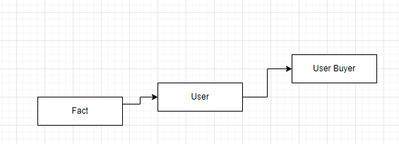
I would like to model the purchasing process of a company, I would also like to respect the star schema.
In the company, every employee is a buyer and this buyer belongs to a buyer group, for example:
buyer buyer group
buyer 1 group 1
buyer 1 group 2
buyer 2 group 2
the problem is that the same buyer can belong to several groups, so I can't put buyer group in the same dimension table that contains the information of each buyer.
so as a solution, do i create another dimension table that contains only one column that is the buyer group and that will be related to the fact table directly
I have the same case for the bank account used to make the purchase by the customer.
Translated with www.DeepL.com/Translator (free version)
@amitchandak in this case , it will be a many to many relationship , i can' avoid that .How should u handle it ? Thanks
If you have recently started exploring Fabric, we'd love to hear how it's going. Your feedback can help with product improvements.
A new Power BI DataViz World Championship is coming this June! Don't miss out on submitting your entry.
Share feedback directly with Fabric product managers, participate in targeted research studies and influence the Fabric roadmap.
| User | Count |
|---|---|
| 48 | |
| 45 | |
| 41 | |
| 20 | |
| 17 |
| User | Count |
|---|---|
| 69 | |
| 64 | |
| 32 | |
| 31 | |
| 27 |