Join us at FabCon Atlanta from March 16 - 20, 2026, for the ultimate Fabric, Power BI, AI and SQL community-led event. Save $200 with code FABCOMM.
Register now!The Power BI Data Visualization World Championships is back! It's time to submit your entry. Live now!
Hi, I'm fairly new to Power Bi and I'm not understanding how to do this.
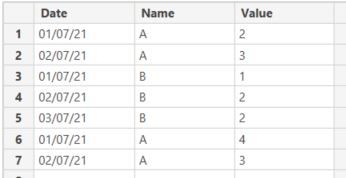
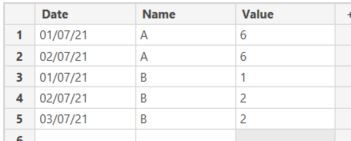
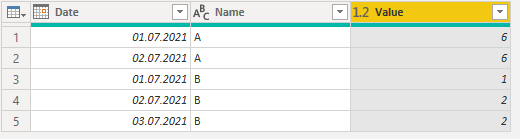
Let's say I have table (1) and I want to create table (2):
(1)Starting table
(2)What I want
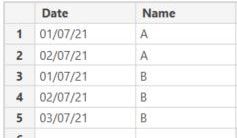
I managed to create table (3), but I want to create a calculated column like the one in table (2)
(3)
I don't know how to summarize in a calculated column.
Any help would be greatly appreciated,
thanks
Solved! Go to Solution.
Hey @Anonymous ,
to get rid of rows, you always have to use Power Query. A calculated column just adds a new column, but it will not combine rows.
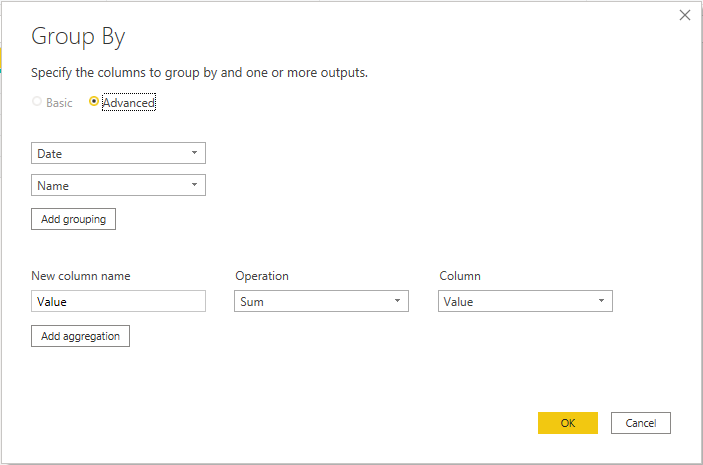
In your case you need a group by with the following criteria:
Then the result will look like this:
Check the video I created on how to do that, it's pretty easy:
Hey @Anonymous ,
to get rid of rows, you always have to use Power Query. A calculated column just adds a new column, but it will not combine rows.
In your case you need a group by with the following criteria:
Then the result will look like this:
Check the video I created on how to do that, it's pretty easy:
Thank you for your solution, I will try it out.
Let's say I don't care about rows, i.e. I want every rows to display the sum of "Value" for every "Name", how would you do that?
Hey @Anonymous ,
you can add a calculated column and ignore all the row context except for the Name. The following calculated column will do that:
Total Value by Name =
CALCULATE(
SUM( 'myTable'[Value] ),
ALLEXCEPT(
'myTable',
'myTable'[Name]
)
)
The Power BI Data Visualization World Championships is back! It's time to submit your entry.
Check out the January 2026 Power BI update to learn about new features.
| User | Count |
|---|---|
| 66 | |
| 44 | |
| 34 | |
| 26 | |
| 23 |
| User | Count |
|---|---|
| 137 | |
| 118 | |
| 58 | |
| 40 | |
| 35 |