I have searched for a solution for this issue, but so far none of them have worked for me. Here's the scenario:
I have a report that calculates the Sales YTD-1 using this measure:
Sales YTD -1 =
VAR LastDayAvailable =
CALCULATE (
MAX ( Facts[Date] ),
ALL ( Facts )
)
VAR CurrentDates =
FILTER (
VALUES ( date_table[Date] ),
date_table[Date] <= LastDayAvailable
)
VAR Result =
CALCULATE ( [Sales YTD],
SAMEPERIODLASTYEAR ( CurrentDates )
)
RETURN
Result
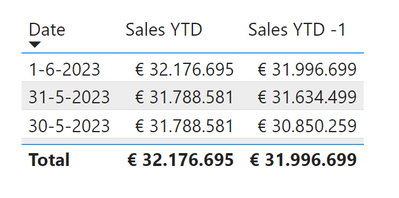
This gives me the result I expect: the total for this year matches with the date of today, looking one year back.
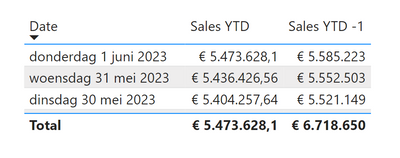
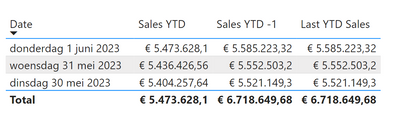
However when I copied this measure to a new report, with basically the same set up (facts table connected to date table, max date is today) the total gives me a number for the entire month of June, instead of 1-1-2022 till 1-6-2022.
So same measure, different results. There are no filters on the measure nor on the page.
Is there something extremely obvious that I'm missing here? I know SAMEPERIODLASTYEAR behaves this way (calculating the whole month of the previous year) but somehow that's not the case with my first table.