Hi All,
Trying to make a measure for KPI tracking where I'm counting each unique creation for a User, i.e.
- If the User created the Opportunity/Lead and then the resulting Conversion, I only want to count that as 1.
- If the User created the Conversion from someone elses Opportunity/Lead, I want it to count as 1 for both Users.
This seems like it should be simple but it's just not working the way I'd expect.
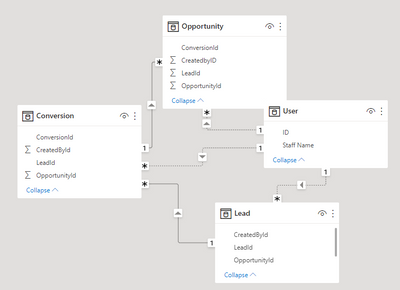
My three tables are as below:
Table A: 'Conversion'
| ConversionId | | CreatedById | | LeadId | | OpportunityId |
| 1 | | 10 | | 100 | | |
| 2 | | 10 | | | | 1000 |
| 3 | | 20 | | 200 | | 2000 |
| 4 | | 20 | | 200 | | 2000 |
| 5 | | 10 | | 300 | | 2000 |
| 6 | | 20 | | | | |
Table B: 'Lead'
| LeadId | | CreatedById | | OpportunityId |
| 100 | | 10 | | |
| 200 | | 20 | | 2000 |
| 300 | | 10 | | 2000 |
Table C: 'Opportunity'
| OpportunityId | | CreatedById | | ConversionId | | LeadId |
| 1000 | | 20 | | 2 | | |
| 2000 | | 10 | | | | 200 |
| 2000 | | 10 | | | | 300 |
| 3000 | | 10 | | | | |
| 4000 | | 20 | | | | |
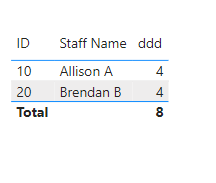
I want to count the unique Id's within each Table to link back for each Staff member (CreatedById) so that the end result for Staff (CreatedById) 10 & 20 would look like this:
| Staff Id | | Staff Name | | Unique Creations |
| 10 | | Allison A | | 4 |
| 20 | | Brendan B | | 4 |
Reasoning:
- Allison A (Id 10) Created 3 Opportunities, 2 Leads and 3 Conversions.
- Of the 3 Conversions, One was from their Created Lead, One was from their Created Opportunity
- Of the 2 Leads, One was from their Created Opportunity
- Therefore their Unique Creations are made up from:
- OpportunityId's
- LeadId
- ConversionId
Current Measure:
    CALCULATE(
        CALCULATE(
                    DISTINCTCOUNT('Conversion'[ConversionId])
                ,   USERELATIONSHIP('Conversion'[CreatedById], 'User'[Id])
                ,   'Conversion'[OpportunityId] = BLANK()
                ,   'Conversion'[LeadId] = BLANK()
            )
        +
            CALCULATE(
                DISTINCTCOUNT('Opportunity'[Id])
            ,   USERELATIONSHIP('Opportunity'[CreatedById], 'User'[Id])
            )
        +
            CALCULATE(
                DISTINCTCOUNT('Lead'[Id])
            ,   USERELATIONSHIP('Lead'[CreatedById], 'User'[Id])
            )
        )
This is the closest I've managed, however in my tables above, this would exclude ConversionId 6
Appreciate any assistance with this!